Women of Monotheism: Judaism, Christianity & Islam (Three-Part Series)

Since the creation of earth, God entrusted women with remarkable roles in preserving faith, supporting Prophets, strengthening families, and demonstrating unwavering trust in Him. Although Prophets were chosen to deliver divine revelation, many of the greatest examples of patience, sacrifice, courage, and devotion are found in the lives of righteous women of the Abrahamic Faiths.
PART ONE
Mothers in Islam
In many Muslim households, it is often taught that “Paradise (Jannah) lies beneath the feet of your mother.” This saying reflects the extraordinary honor Islam places upon mothers. Muslims are encouraged to care for their mothers, love and respect them, support them, care for them if they are sick, and make their lives easier whenever possible. After devotion to Allah, no other relationship has greater importance than the bond between a person and their mother. This principle remains deeply rooted in many Muslim households.
In Islam, women are recognized as spiritually accountable, morally capable, and equally eligible for Allah’s Mercy and Reward. They are honored as mothers, wives, daughters, scholars, professionals, community leaders, believers, and independent servants of Allah.
The rights of women were established through the revelation of the Holy Quran. Women are mentioned or referred to more than 150 times throughout the Quran, reflecting their important roles within the family, the community, society, and religion.
Since the time of Prophet Muhammad (peace be upon him), Muslim women have been recognized as having the right to:
Own and inherit property.
Keep and manage their own money and earnings.
Consent freely to marriage.
Receive a marriage gift, known as the Dowry (Mahr).
Seek knowledge and education.
Conduct business and engage in trade.
Give charity independently (Zakah).
In extreme circumstances, seek divorce through recognized legal processes.
Be a righteous leader in the community.
Throughout Islamic history, Muslim women have served as business owners, landowners, educators, scholars, medical professionals, and respected leaders within their communities. From the earliest days of Islam, women have made significant contributions to education, science, commerce, healthcare, charitable work, and the preservation of religious knowledge.
Islam places extraordinary emphasis on honoring mothers. Kindness toward parents is repeatedly commanded throughout the Holy Quran. Particular attention is given to the sacrifices a mother makes through pregnancy, childbirth, nursing, and raising her children. Few human relationships receive greater emphasis in the Abrahamic faiths than the bond between a mother and her children. Her love, sacrifice, and devotion are recognized as among the greatest blessings bestowed by Allah. Mothers hold the highest status in every Muslim family.
Wives are regarded as companions and partners in life; deserving of love, comfort, compassion, and support. They possess their own rights, dignity, respect, and individual identity before Allah. Marriage in Islam is founded upon mutual respect, honor, and shared success. Both husband and wife are accountable to Allah for their words, actions, and treatment of one another. The Holy Quran beautifully describes spouses as "garments for one another," symbolizing closeness, protection, comfort, dignity, and mutual support.
Daughters are cherished, protected, nurtured, and educated. Islam teaches that they should be treated with love, fairness, dignity, and justice. Prophet Muhammad (peace be upon him) strongly condemned the practice of shaming daughters and promised immense reward for those who raised them with kindness, compassion, justice, and love. In Islam, daughters are considered a blessing from Allah and a treasured extension of the family, deserving of love, respect, and every opportunity to grow in faith and righteousness.
One of the most well-known and authentic narrations in Islam illustrates the high status of mothers. A man once asked Prophet Muhammad (peace be upon him), "Who is most deserving of my good companionship?" The Prophet replied, "Your mother." The man asked, "Then who?" The Prophet again replied, "Your mother." He asked a third time, and the Prophet once more answered, "Your mother." When the man asked a fourth time, the Prophet replied, "Then your father." This powerful teaching emphasizes the extraordinary honor, love, support, and respect that Islam commands believers to show their mothers.
However, Islamic reverence must never be confused with worship. Even the most honored women are respected as righteous human beings and devoted servants of Allah. They are never regarded as divine figures or intermediaries worthy of worship. Every soul is individually accountable before Allah and will answer for the life they lived on earth.
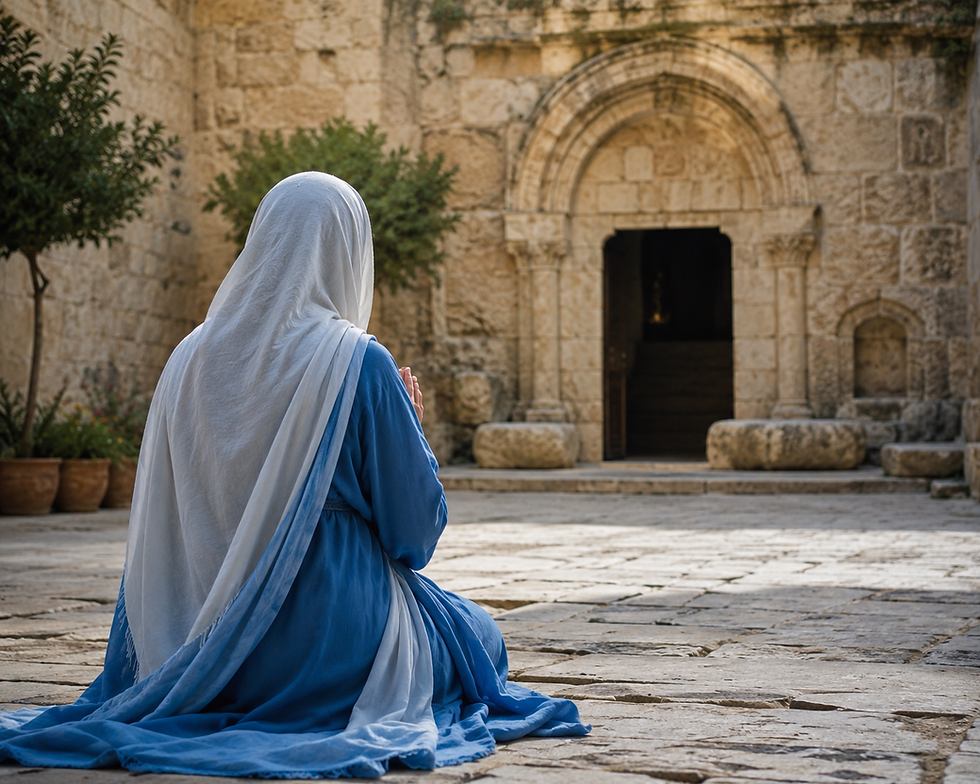
Among all the righteous women honored in Islam, none is mentioned more often or held in higher esteem in the Holy Quran than Maryam (Mary) (peace be upon her), the mother of the Messiah Jesus Christ (peace be upon him). She is the only woman mentioned by name in the Holy Quran and is regarded as one of the greatest examples of faith, purity, humility, patience, sacrifice, and complete trust in Allah. Her remarkable life serves as an enduring inspiration to believers around the world.
PART TWO
Maryam (Mary) (peace be upon her)
Mother of the Messiah, Jesus Christ (peace be upon him)
Coming Soon InshAllah


Comments